Let’s be honest — most of us don’t have a clothing problem, we have a decision problem. You open the closet, stare at forty options, and still feel like you have nothing to wear. That’s decision fatigue talking, and it’s the exact thing a minimalist wardrobe is designed to kill.
This isn’t about owning ten items and calling it a personality. It’s about building a closet where everything works, everything fits your actual life, and getting dressed stops eating up your morning. Here’s how I’d build a minimalist capsule wardrobe from scratch, plus the curated pieces I think earn a permanent spot in your closet.
**Just a heads-up—this post contains affiliate links, meaning I may earn a small commission if you shop through them (at no extra cost to you). No gatekeeping here—I only share products I genuinely love and swear by.**
Why Fewer Clothes Actually Means Better Style
Owning fewer items sounds like a sacrifice until you actually try it. In practice, it’s the opposite. When every hanger holds something you love and wear, you stop scrolling past clothes you forgot you owned. You get dressed faster. You spend less money chasing latest trends that’ll feel dated in six months. And weirdly, you end up looking more put-together, not less, because everything left in rotation actually fits your life.
There’s also the fast fashion angle. Cheap, trend-driven pieces fall apart after a handful of washes, which means you’re constantly replacing them — more clutter, more spending, more waste. A minimalist approach flips that: you buy less, but you buy it to last.
Know Your Base Before You Buy Anything
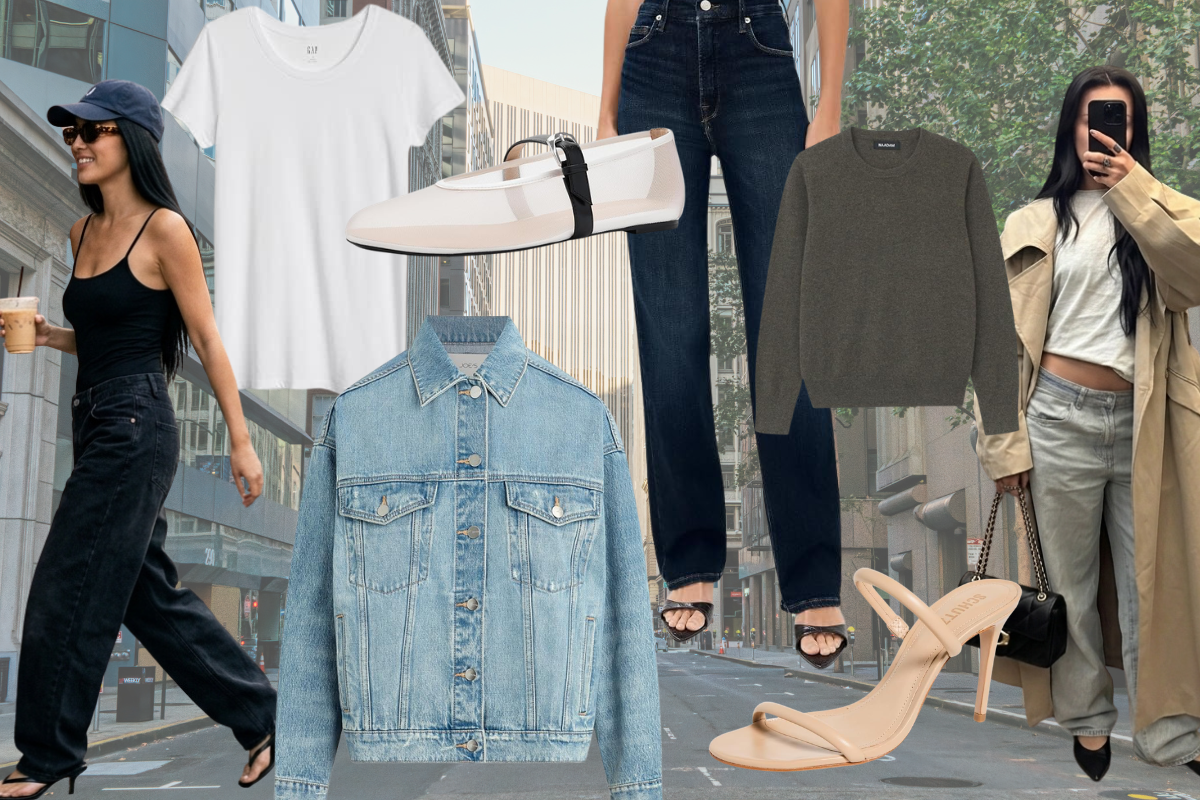
Before you buy a single piece, figure out your base color. Are you a black-and-white person, or do you lean warmer with camel and cream? This isn’t about trends — it’s about what actually flatters your skin tone and what you’ll reach for without thinking. Most capsule wardrobes are built on a neutral color palette (think black, white, navy, camel, gray) with maybe one or two accent tones layered in. Neutral tones are the reason a capsule wardrobe works at all — they let every piece talk to every other piece, so nothing sits in the closet unworn.
While you’re at it, take an honest look at your body type. Not to change anything about yourself — just so you know which silhouettes actually work with your body shape. A tailored blazer might be your best friend or your least favorite thing depending on your proportions, and that’s worth knowing before you spend money.
The Core Pieces Every Minimalist Closet Needs
Okay, the actual list. These are the pieces I’d tell any friend to buy first, in whatever neutral color palette speaks to them.
A perfect white t-shirt. Not a nice-to-have — foundational. It goes under blazers, tucked into trousers, worn alone with jeans. Spend a little more here; a cheap tee loses its shape fast. Look for a heavier cotton or a cotton-modal blend — thin, cheap tees go see-through and lose their shape after a handful of washes, while a well-made one holds its color and structure through years of wear. This is also the piece worth owning in two fits: a slightly boxy one for casual days and a more fitted one for tucking in. Between the two, you’ve covered almost every casual outfit you own without touching another piece in the closet.

Our Favorite White T-Shirts:
- Gap Women’s Favorite Crewneck Tee T-Shirt
- Free People Women’s Perfect Oversized Tee
- Madewell Women’s Northside Vintage Tee
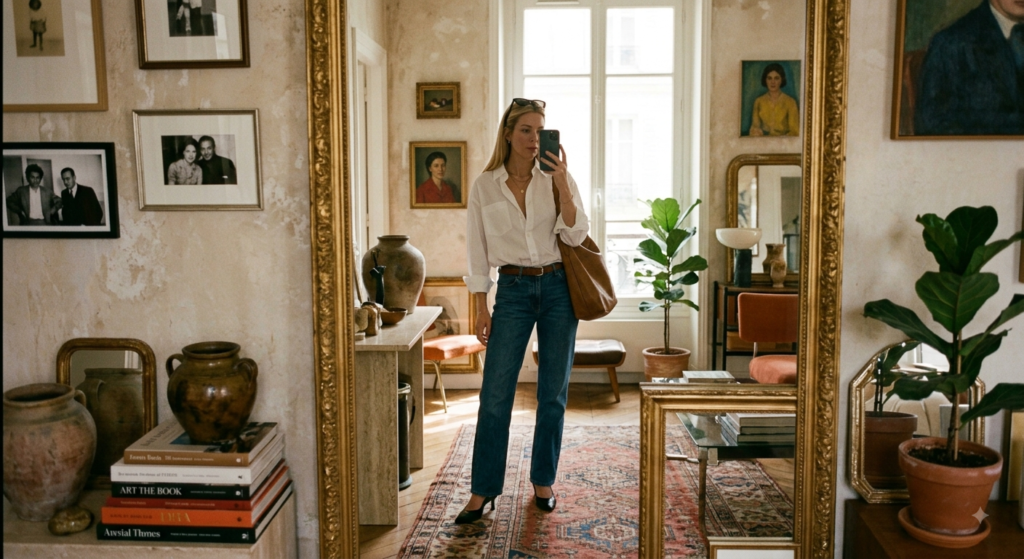
A white button-down shirt. This one single-handedly does more outfit work than almost anything else you own. Wear it buttoned all the way with a blazer for something office-ready, or tied at the waist over a swimsuit. It’s the definition of versatile pieces. Left unbuttoned over a tank top, it becomes a light layer for warm evenings; buttoned low with sleeves rolled, it works just as well with jeans as it does with tailored pants. One good white button-down covers more ground than almost any other single item in the closet.
Our Favorite Button-Down Shirts:
- POLO RALPH LAUREN Women’s Oxford Classic Fit Button Down Shirt
- GAP Womens Woven Big Shirt
- Theory Women’s Classic Menswear Shirt
Basic t-shirts in your core neutrals. One white, one black, maybe one gray. These are your blank canvas days. They’re not meant to be exciting on their own — they’re meant to disappear into whatever you pair them with, whether that’s a blazer and trousers or a denim jacket and sneakers. Keep them simple and well-fitted, and let the rest of the outfit do the talking.
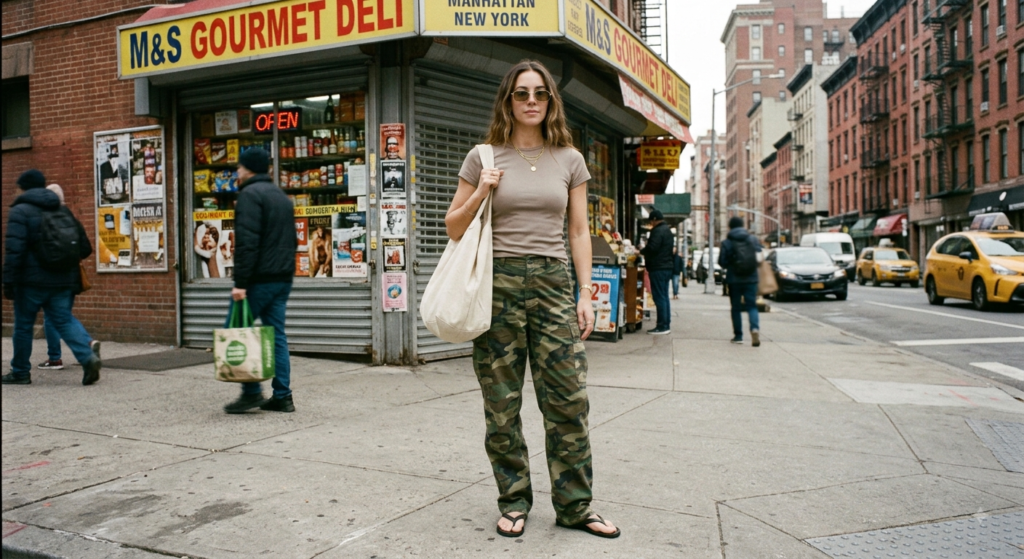
Our Favorite Neutral T-Shirts:
- rag & bone Women’s The Essential Rib Short Sleeve Crew Tee
- Veronica Beard Jean Women’s Waldorf Tee
- Lioness Women’s Bloom Short Sleeve Tee
Black jeans. Somehow dressier than blue denim without trying, and they layer under nearly anything. They read a little more polished than a standard blue wash, which makes them the easier choice when you’re not sure if an outfit needs to lean casual or dressed-up — a black tee and black jeans is a full outfit on its own, no extra thought required
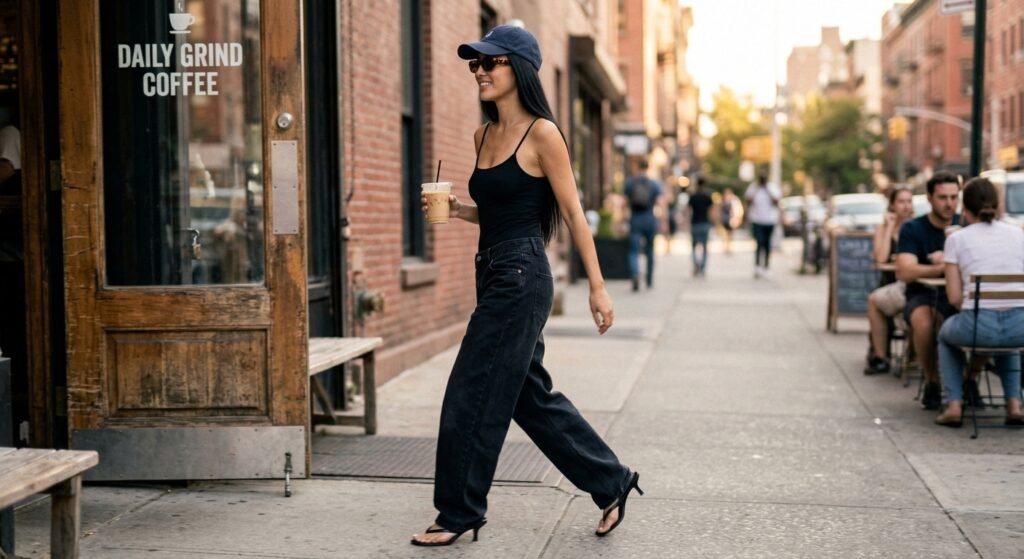
Our Favorite Black Jeans:
- rag & bone Women’s Featherweight Logan Jeans
- DL1961 Women’s Hepburn Wide Leg: High Rise Vintage Jeans
- PISTOLA – Lexi Mid Rise, Signature Bowed Straight Black Jeans
Skinny jeans in a dark wash — or your preferred cut, honestly, but a well-fitting pair of jeans is the connective tissue of a minimalist closet. A dark wash reads dressier than a faded or distressed one, so it moves easily between a casual day and a dinner out without needing a change of clothes. The cut matters less than the fit — whatever silhouette you actually reach for, prioritize one that fits well right off the rack so you’re not tempted to leave it in the closet.

Our Favorite Dark Wash Jeans:
- Levi’s Women’s Cinch Baggy Jean
- Gap Women’s Mid Rise Legging Pant
- Good American Women’s Soft Tech Good True Straight Jeans
Black pants, tailored. The kind you can wear to a work dinner or a first date without a second thought. A clean, tailored pair does more for an outfit’s polish than almost anything else on this list — pair them with the white button-down for the office, or a simple tee and the leather jacket for something less buttoned-up. Get the length right and they’ll outperform half the “occasion” pieces sitting unused in most closets.

Our Favorite Black Tailored Pants:
- Theory Women’s Slim Trousers
- Lee Women’s Ultra Lux Comfort with Flex Motion Trouser Pant
- PRETTYGARDEN Tailored Wide Leg Pants
A denim jacket. The easiest layering piece that exists. Throw it over a dress in summer, under a coat in fall. It softens up anything too dressy and adds a little structure to anything too plain — a denim jacket over the LBD instantly makes it feel less “occasion” and more everyday, which is exactly the kind of flexibility a minimalist closet runs on.

Our Favorite Denim Jackets:
- AUTOMET Button Down Oversized Jeans Jacket with Pockets
- Lucky Brand Women’s Tomboy Trucker Jean Jacket
- JOE’S JEANS The Oversized Denim Jacket
A leather jacket. This is your statement piece — the one item that adds edge to an otherwise simple outfit. One good leather jacket will outlast a decade of trend pieces. Thrown over the simplest outfit — basic tee, jeans, sneakers — it’s the one piece that can make the whole look feel intentional instead of like you didn’t try. It’s also the item most worth spending up on, since a well-made one only gets better with age instead of falling apart.
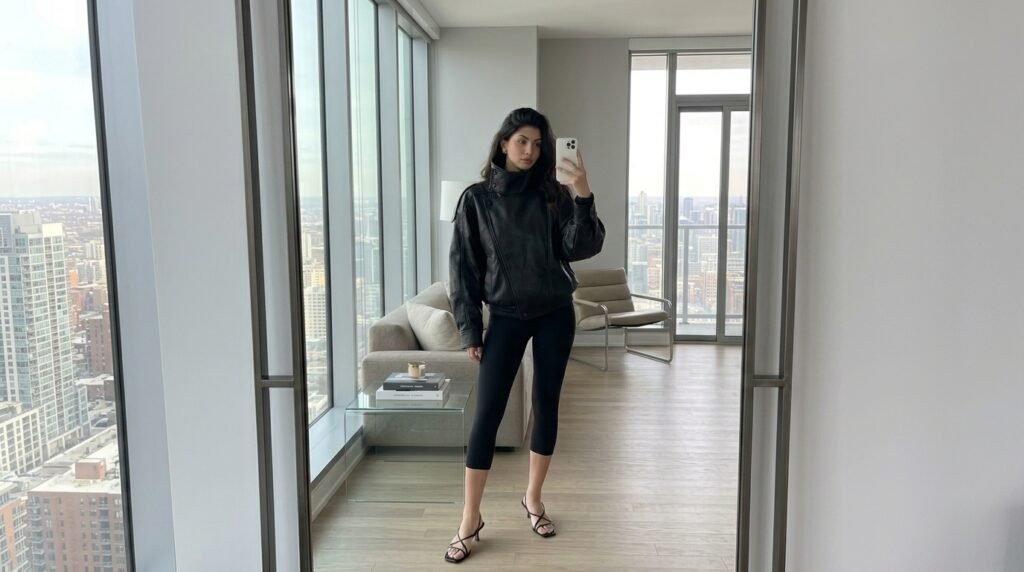
Our Favorite Leather Jackets:
- AUTOMET Women’s Oversized Faux Leather Jacket
- Lioness Leather Shoreline Funnel Neck Jacket
- Steve Madden Faux Leather Bomber Motorcycle Jacket
A trench coat. Timeless, transitional, and somehow appropriate for every season except deep winter. It works over a blazer for extra warmth in early spring, or on its own over a simple tee in fall — one piece quietly covering three seasons most coats can only handle one of. Belted or open, it’s also one of the few pieces that looks equally right dressed up or thrown on last-minute.

Our Favorite Trench Coats:
- Levi’s Women’s Reversible Plaid Short Trench Coat
- Orolay Women’s 3/4 Length Double Breasted Trench Coat Lapel Jacket with Belt
- JOE’S JEANS Women’s The Liz Cropped Trench Coat
A proper winter coat. Buy this once, buy it well. This is not the place to cut corners — it’s the piece that has to survive years of actual cold weather. This is the one item on the list where price-per-wear math genuinely favors spending more upfront — a well-made coat holds its shape and warmth season after season, while a cheaper one usually needs replacing within a year or two of real winter use.
Our Favorite Winter Coats:
- Dokotoo Suede Quilted Cropped Winter Jacket
- Champion Women’s Cropped Puffer Jacket
- Womens Long Wool Coats
A little black dress. The cliché exists because it’s true. One LBD, tailored to your body, solves more “what do I wear” panics than anything else in this list. Dress it up with the nude heels and a statement earring, or down with the denim jacket and sneakers — it’s the one piece that can go from a work event straight to dinner without a wardrobe change, which makes it worth getting properly tailored rather than settling for off-the-rack fit.
Our Favorite Black Dresses:
- Norma Kamali Sleeveless Midi Dress
- Dress The Population Lyla Plunging Sleeveless Midi Dress
- Veronica Beard Jean Women’s Charissa Dress
- Vince Women’s Short Sleeve Side Rouche Dress
A few tank tops. For layering, for warm weather, for the days you want simple and done. Under the button-down for extra coverage, under the leather jacket on their own in summer, or worn solo with jeans on the days you want zero decisions to make — they’re the quiet workhorse piece that never asks for attention but shows up in almost every outfit rotation.
Our Favorite Tank Tops:
- Gap Women’s Scoopneck Tank
- Madewell Women’s Lace-Trim Ribbed Tank Top
- Trendy Queen Women’s Double Lined Boat Neck Tank Tops
A classic sweater. The piece that quietly carries you through the coldest stretch of the year. A merino or cashmere-blend crewneck and a lightweight cardigan cover almost every cold-weather need between them — the crewneck layers over the button-down for extra warmth without bulk, while the cardigan does the same job with more flexibility, easy to throw on or take off as the temperature shifts through the day. Both work alone with jeans for something simple and put-together, or under the leather jacket and trench for extra warmth on the coldest days. It’s worth the same buy-it-once approach as the winter coat here — skip anything too textured or trend-driven, and stick to clean, well-fitted pieces in a color that matches your base palette so they outlast a decade of statement knits.
Our Favorite Sweaters:
- Pistola Women’s Nika Heavyweight V Neck Sweater
- Good American The Fine Knit Cardigan
- NAADAM The Original Cashmere Crewneck Sweater
Nude heels that match your skin tone. They elongate your leg line and go with nearly every hem length, which makes them the most versatile shoe you can own. Because they blend with your skin rather than contrasting against it, they visually extend the leg no matter what you pair them with — the LBD, black jeans, a summer dress — making them the one heel that never fights with an outfit instead of finishing it.
Our Favorite Nude Heels:
- Jessica Simpson Prizma D’Orsay Pumps
- SCHUTZ Women’s Taliah Sandal Heels
- Steve Madden Women’s Jypsey Strappy Sandal Heel
A black sandal. The warm-weather answer to the nude heel — dressy enough for a summer dinner, simple enough to wear with literally everything from a sundress to cutoffs. A simple strappy style works hardest here — dressy enough to wear with the LBD on a warm night, casual enough for daytime with denim, so it earns its spot without needing a second sandal to back it up.
Our Favorite Black Sandals:
- Tory Burch Women’s Miller Sandals
- Steve Madden Women’s Mayven Sandal
- DREAM PAIRS Thong Sandal with Block Heel
A pair of flats. Comfort without giving up polish. These are the shoes that get you through a full day on your feet — errands, travel days, a long walk to lunch — while still looking finished. A pointed or almond toe reads a little more polished than a rounded one, which means they can slide into the same outfits as the nude heel on days when comfort needs to win — black pants and a tee, or the button-down with jeans, without losing any of the put-together feel.
Our Favorite Flats:
- Stuart Weitzman Sai Bareitall Mesh Maryjane
- kate spade New York Studded Leather Flats
- Steve Madden Women’s Lucia Ballet Flat
White sneakers. The most-worn shoe in almost every minimalist closet, and for good reason. They soften a tailored outfit, dress up a plain tee and jeans, and quietly go with the entire neutral color palette you’ve already built. Clean and minimal beats logo-heavy here — a simple leather sneaker pairs as easily with tailored black pants as it does with the denim jacket and basic tee, which is exactly why it ends up being the most-worn shoe in the closet even though it’s the most casual one on the list.
Our Favorite White Sneaker:
- Veja Women’s Campo Sneakers
- Steve Madden Womens Momentum Sneaker
- Tory Burch Women’s Tory Travel Sneakers
A quick note on how to actually shop this list: don’t try to buy it all in one go. Start with whatever you reach for most in your current rotation and work outward from there. If you already live in jeans, invest in the black pants and the tailored trench before you worry about the leather jacket. If dresses are your daily uniform, the LBD and nude heels come first. The order matters less than making sure each piece earns a real spot — this is a checklist to build toward, not a shopping cart to fill overnight.
It’s also worth saying that “essential” doesn’t mean identical for everyone. Someone who works from home five days a week has very different daily needs than someone in client-facing meetings every morning, and both of those closets can still be minimalist. The list above is a starting skeleton — swap the blazer for a second denim jacket if tailored pieces aren’t your life, or add a second pair of black pants if trousers are your daily uniform and dresses rarely make an appearance. The goal isn’t to match this list item for item; it’s to walk away with a closet where every single piece is one you’d grab again without thinking twice.
Building In Room for Personal Style
Here’s where I’ll push back on minimalism-as-usually-preached: a capsule wardrobe should never mean erasing your personal style. The neutral base is the structure, not the whole outfit. Once you’ve got your essentials locked, that’s when you layer in what makes it feel like you — a pop of color in a scarf, a statement piece you genuinely love, an accessory with a little more personality than the rest of the closet.
Minimalism isn’t about looking like everyone else who read the same capsule wardrobe checklist. It’s about clearing out the noise so your unique style actually gets to be the loudest thing in the room.
Making It Work for Every Season
A true minimalist wardrobe isn’t static — it flexes with different seasons. The trench and denim jacket carry you through spring and fall. Tank tops and lighter fabrics take over for warm weather. The winter coat and a couple of heavier layers come out when temperatures drop. You’re not buying a whole new set of clothing items each season — you’re rotating a handful of seasonal pieces in and out around a base that stays the same year-round.
This is also where quality earns its keep. High-quality pieces, cared for properly, survive years of seasonal rotation. Cheap ones don’t. If you only remember one rule from this whole article, let it be this: better quality, fewer items, always wins over a closet stuffed with things that fall apart by spring.
From Special Occasions to Grocery Store Runs
A well-built capsule handles the full range of your life, not just the easy days. The little black dress and nude heels step in for special occasions — dinners, weddings, whatever’s on the calendar. The white tee and denim jacket handle the grocery store run without a second thought. That’s the actual test of a minimalist closet: can it flex from a Tuesday errand to a Saturday night out using the same core pieces, just restyled? If yes, you’ve built it right.
Different looks don’t require different clothes — they require different combinations. The same black pants become a work outfit with the button-down, a night-out outfit with a bodysuit and heels, or a weekend outfit with a tee and sneakers. That’s the entire point of a versatile, well-edited closet: fewer decisions, way more outfit ideas.
How to Actually Start Your First Capsule Wardrobe
If this all sounds great in theory but overwhelming in practice, here’s the easy way in.
Step one: pull everything out. You can’t edit what you can’t see. Lay your entire current wardrobe out and actually look at it.
Step two: keep what earns its place. Anything you’ve reached for in the last few months, anything that fits well and matches your base colors, stays. Everything else goes in a “maybe” pile.
Step three: identify your gaps. Compare what’s left against the list above. Missing a good trench? A proper white button-down? That’s your shopping list — not forty new items, just the specific pieces you’re actually missing.
Step four: find a good tailor. This one’s underrated. A ten-dollar hem can turn a mediocre pair of pants into your most-worn item. Fit is the difference between a piece looking expensive and looking like it’s wearing you.
Step five: stop there. Resist the urge to keep adding “just in case” items. The whole point of fewer options is fewer decisions — every extra piece you add back in chips away at that.
None of this happens in a weekend, and that’s fine. A minimalist wardrobe is a long-run project, not a single closet cleanout. Give yourself permission to build it slowly, piece by piece, prioritizing quality over speed.
Mistakes That Undo a Minimalist Wardrobe Fast
I’ve watched a lot of people start strong on this and then quietly rebuild the exact cluttered closet they were trying to escape. A few things tend to be the culprit.
Buying new clothes to “complete” the capsule. The best way to build this closet is slowly, filling actual gaps — not going on a single shopping trip and buying twelve things because a blog post told you to. That’s just clutter with better branding.
Chasing someone else’s minimalist style. Different people need different pieces. A person who lives in jeans and sneakers has no use for a trench coat and heels, no matter how often that combo shows up on a minimalist wardrobe checklist. Build around how you actually wear clothes, not how someone else does.
Confusing “fewer” with “cheaper.” The number of items in your closet matters less than the quality of each one. Ten pieces of clothing that hold their shape for years beat thirty that pill after one wash.
Forgetting the in-between days. It’s easy to plan for special occasions and easy days, but various occasions in between — a casual work event, a dinner that’s not quite fancy — are where a lot of capsule wardrobes fall apart. Make sure a few of your pieces can stretch to cover that middle ground.
Is a Minimalist Capsule Wardrobe Actually Right for You?
Not everyone needs to go all-in on the capsule wardrobe concept, and that’s a good idea to sit with before you overhaul your whole closet. If getting dressed already feels easy and fun for you, a full minimalist wardrobe might strip out some of the joy. But if you’re someone who stands in front of a full closet every morning feeling stuck, this approach solves that specific problem — and solves it fast.
The important things to keep in mind: this is a framework, not a rulebook. You’re allowed to own more than the “essential” number if those extra pieces genuinely earn their place. You’re allowed to keep something sentimental that doesn’t fit the neutral color palette. The goal was never a smaller closet for its own sake — it was less time spent deciding, more time spent actually living in clothes you like.
Once you’ve got your own capsule wardrobe dialed in, maintaining it takes almost no effort. New pieces only come in when something wears out or when a genuine gap shows up in your everyday wear rotation. That’s the whole trick — the best things about this system are what happens after the initial setup, when getting dressed stops being a decision at all.
The Bottom Line
A minimalist wardrobe isn’t about restriction — it’s about clarity. Fewer, better pieces in colors that actually work for you, chosen with your real daily routine in mind, will always outperform a packed closet full of things you don’t reach for. Start with the neutral base, layer in the pieces that reflect your personal style, and let the rest go. Your future self, standing in front of a closet that actually makes sense, will thank you.
You don’t need to overhaul everything this weekend. Pick one gap from the list above, fill it with a piece that’s genuinely well made, and build from there. A minimalist closet isn’t a finish line — it’s just what’s left once you stop keeping things out of guilt or habit.